Abstract
A Gram-positive, non-motile, non-spore-forming coccus (strain JST) was isolated from kimchi (a traditional Korean food) and investigated using a polyphasic taxonomic approach. The 16S rRNA gene sequence similarity between strain JST and its closest relative, Tetragenococcus halophilus IAM 1676T, was 98·1 %. The level of DNA–DNA relatedness between the two strains was 9·7 %. Strain JST had a DNA G+C content of 38·3 % and a cellular fatty acid profile containing 16 : 0, 18 : 1 and cyclo fatty acids. Phylogenetic data and genomic and phenotypic features demonstrated that strain JST represents a novel species, for which the name Tetragenococcus koreensis sp. nov. is proposed. The type strain is JST (=KCTC 3924T=DSM 16501T=LMG 22864T).
-
The GenBank/EMBL/DDBJ accession number for the 16S rRNA gene sequence of strain JST is AY690334.
-
A scanning electron micrograph of cells of strain JST is available as supplementary material in IJSEM Online.
The genus Tetragenococcus is classified within the family ‘Enterococcaceae’, which belongs to the order ‘Lactobacillales’ in the class ‘Bacilli’ (Garrity & Holt, 2001). The genus was created by Collins et al. (1990) after reclassification of the halophilic lactic acid bacterium [Pediococcus] halophilus as Tetragenococcus halophilus. At present, the genus comprises three species: T. halophilus, Tetragenococcus muriaticus (Satomi et al., 1997) and Tetragenococcus solitarius (Ennahar & Cai, 2005).
Kimchi is a common food in Korea. It is prepared with various kinds of vegetables, spices and other ingredients, and becomes palatable through ageing under anaerobic conditions. Kimchi fermentation is initiated by various micro-organisms present in the raw materials, but is gradually dominated by lactic acid bacteria.
Strain JST was isolated from a traditional Korean food, kimchi, by direct plating on glucose yeast peptone (GYP)/sodium acetate/mineral salts agar at pH 7·0 (medium 243; BCCM). After 7 days incubation on GYP/sodium acetate/mineral salts agar, colonies were smooth, low convex, circular, opaque, matt and white in colour. Strain JST grew at 15–30 °C but not at, or above, 4 °C or at temperatures above 42 °C. The strain grew optimally at pH 9. Optimal growth was obtained in 2–5 % (w/v) NaCl. Strain JST did not grow under aerobic conditions on R2A agar (Difco), nutrient agar, MacConkey agar (Difco) or trypticase soy agar (Difco) at 30 °C. For maintenance of the culture and further analyses, strain JST was grown on MRS agar (Difco) at 30 °C, unless specified otherwise.
Cell morphology and motility were observed under a Nikon Optiphot 111675 light microscope (1000× magnification). Cell morphology was also examined by using scanning electron microscopy. The procedures used for sample fixation and preparation were as described by Chung & Hancock (2000), with some modifications. Cells were non-spore-forming, non-motile cocci occurring singly or in pairs. The cell diameter was less than 1 μm (see the Supplementary Figure in IJSEM Online) on GYP/sodium acetate/mineral salts agar. The Gram reaction, determined by the non-staining method described by Buck (1982), was positive. Oxidase activity was tested using the oxidation of 1 % p-aminodimethylaniline oxalate. Catalase activity was determined using bubble production with 3 % (v/v) hydrogen peroxide solution. Strain JST showed no catalase or oxidase activities.
For 16S rRNA gene sequencing, cell biomass was obtained from cultures grown in MRS broth (Difco) on a horizontal shaker (150 r.p.m.) at 30 °C. The culture was checked for purity using a light microscope prior to harvesting by centrifugation. Chromosomal DNA was extracted and purified using the DNeasy Tissue Kit (Qiagen). The 16S rRNA gene was PCR-amplified and analysed as described by Yoon et al. (1998). Complete 16S rRNA gene sequences were compiled after sequencing using SeqMan software (DNASTAR), and 16S rRNA gene sequences of the test strains were edited using the BioEdit program (Hall, 1999) and aligned using clustal_x (Thompson et al., 1997). The phylogenetic tree was constructed by using the neighbour-joining method (Saitou & Nei, 1987) in mega version 2.1 (Kumar et al., 2001).
The almost-complete sequence determined for the 16S rRNA gene of strain JST was a continuous stretch of 1492 nt and there were no ambiguous bases. Analysis of 16S rRNA gene sequence similarities showed that strain JST was most closely related to T. halophilus IAM 1676T (97·8 %), T. solitarius DSM 5634T (97·2 %) and T. muriaticus JCM 10006T (95·9 %). The neighbour-joining tree showed that strain JST and the three Tetragenococcus species formed a coherent cluster (supported by a bootstrap resampling value of 100 %) that was adjacent to genus Melissococcus (Fig. 1⇓). This tree topology of the genus Tetragenococcus was also found in the trees generated by the maximum-parsimony algorithms (Kimura two-parameter model; Kimura, 1983).
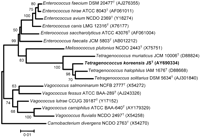
Neighbour-joining tree, based on 16S rRNA gene sequences, showing the phylogenetic positions of strain JST and other related taxa. Bootstrap values are expressed as percentages of 1000 replications. Bar, 0·01 substitution per nucleotide position.
Acid production from carbohydrates was determined as described by Hugh & Leifson (1953). The API 20NE, API 32GN, API 50 CH and API 20 Strep microtest systems were used according to the recommendations of the manufacturer (bioMérieux). Strain JST did not reduce nitrate to nitrite or nitrogen gas. Strain JST had β-glucosidase and β-galactosidase activity but protein was not hydrolysed. The differential phenotypic properties of strain JST and other type strains of species in the genus Tetragenococcus are summarized in Table 1⇓.
Phenotypic characteristics that differentiate strain JST from other members of the genus Tetragenococcus
Taxa: 1, T. halophilus IAM 1676T; 2, T. muriaticus JCM 10006T; 3, T. solitarius DSM 5634T; 4, strain JST. All strains were Gram-positive cocci, non-motile, non-pigmented, catalase-negative and halophilic. All strains hydrolysed aesculin and had urease activity. All strains were positive for fermentation of N-acetylglucosamine, d-glucose, d-fructose and salicin. All strains were negative for fermentation of l-fucose, 5-ketogluconate, lactose, d-lyxose, d-melibiose, methyl β-d-xyloside, d-raffinose, l-rhamnose, l-xylose, glycogen, starch, adonitol, l-arabitol, erythritol, glycerol, sorbitol and inulin. +, Positive reaction; −, negative reaction; w, weakly positive reaction; nd, no data.
For fatty acid methyl ester analysis, cell mass for all strains was obtained after 7 days incubation at 30 °C on GYP/sodium acetate/mineral salts agar. Fatty acid methyl esters were prepared, separated and identified using the Sherlock Microbial Identification System (MIS; MIDI) (Sasser, 1990). Strain JST had a cellular fatty acid profile containing large amounts of saturated, unsaturated and cyclo fatty acids. The fatty acid profile (Table 2⇓) of strain JST comprised the dominant fatty acids C16 : 0 (22·43 %), C18 : 1ω7c/ω9t/ω12t (33·8 %) and C19 : 0 cyclo ω8c (26·8 %). No significant differences in the fatty acid profiles were found between strain JST and other species of the genus Tetragenococcus.
Cellular fatty acid profiles of strains JST and other closely related species in the genus Tetragenococcus
Taxa: 1, T. halophilus IAM 1676T; 2, T. muriaticus JCM 10006T; 3, T. solitarius DSM 5634T; 4, strain JST. For unsaturated fatty acids, the position of the double bond is located by counting from the methyl (ω) end of the carbon chain; cis and trans isomers are indicated by the suffixes c and t, respectively.
The peptidoglycan structure of the cell wall was determined as described by Schleifer (1985) and Schleifer & Kandler (1972), with the modification that TLC on cellulose was used instead of paper chromatography. The total hydrolysate of the peptidoglycan contained the amino acids alanine and glutamic acid plus smaller amounts of lysine and aspartic acid. In addition, the peptide l-lys–d-Asp was detected; it is stable under the conditions used for total hydrolysis (100 °C, 4 M HCl, 16 h). Partial hydrolysis (100 °C, 4 M HCl, 45 min) resulted in the peptides l-ala–d-glu and l-lys–d-Ala. From these data it was concluded that strain JST possessed peptidoglycan type A4α l-lys–d-Asp (type A11.31 according to ).
For determination of the DNA G+C content, genomic DNA was extracted and purified as indicated above for 16S rRNA gene sequence analysis, and was then enzymically degraded into nucleosides as described previously (Mesbah et al., 1989; Tamaoka & Komagata, 1984). The genomic DNA G+C content of strain JST was 38·3 mol%, which is a little higher than those of the other three species of the genus.
For DNA–DNA hybridizations, DNA was extracted as indicated above. Hybridizations were performed fluorometrically by the method of Ezaki et al. (1989), using photobiotin-labelled DNA probes and microdilution wells, with five replications for each sample. The highest and lowest values obtained for each sample were excluded; the remaining three values were used to calculate similarity values. The DNA relatedness values quoted are the means of these three values. Strain JST exhibited low levels of DNA–DNA hybridization: 9·7 % with T. halophilus IAM 1676T, 61·0 % with T. solitarius DSM 5634T and 39·0 % with T. muriaticus JCM 10006T.
Lactic acid production was analysed by using HPLC (Acme HPLC; Younglin Instrument Co.). The HPLC analysis was performed with an HPLC system (processor, pump model SP930D, UV detector model UV 730D, column oven, auto-sampler) from Younglin Instrument Co. This was equipped with an Aminex HPX-87H organic acid analysis column from Bio-Rad. A 20 μl aliquot of the 10−3 dilution of strain JST culture broth was injected; 0·0035 M H2SO4 solution was used as eluent, at 30 °C and at a flow rate of 0·7 ml min−1. The lactic acid in the culture broth was detected using a UV detector (210 nm) (Younglin Instrument Co.) and compared with a standard lactic acid from Aldrich, USA. Strain JST produced lactic acid homofermentatively.
For the rhamnolipid production assay, HPLC was carried out using a Waters Altantis dC18 reversed-phase column (150×3·9 mm, 5 μm). An aliquot (20 μl) of the strain JST culture broth was injected; 100 % water was used as eluent at 30 °C with a flow rate of 0·6 ml min−1. Products were detected using a UV detector (204 nm), then compared with a standard rhamnolipid biosurfactant from the Korea Research Institute of Bioscience and Biotechnology (Daejeon, Republic of Korea). The surface tension of the cell-free culture broth was determined with a Thermo Cahn tensiometer with the WinDCA32 software suite (Cahn Instruments) according to the De Nöuy ring method (Zajic & Seffens, 1984). To estimate the emulsification activity, 5 ml n-hexadecane was added to 5 ml cell-free culture broth in graduated test tubes. These tubes were then vortexed for 2 min and allowed to stand at 30 °C. The emulsion stability was measured after incubation for 24 h. The emulsification index (E24 %) was calculated by dividing the height of the emulsion layer by the total height of the mixture and multiplying the quotient by 100. The use of biosurfactants generally results in foaming, a decrease in surface tension, and emulsification of hydrocarbon substrates. The growth of strain JST on 2–5 % (w/v) NaCl on GYP/sodium acetate/mineral salts agar for 7 days lowered the surface tension to 34·9 dyne cm−1, and the emulsifying activity was 61·5 %. It has been reported that rhamnolipids were produced by Pseudomonas aeruginosa (Rahman et al., 2002) from various substrates, including industrial waste (Haba et al., 2000). They are as diverse, in terms of chemical structure and properties, as the producer micro-organisms (Kosaric, 1987). Biosurfactants are biodegradable, less toxic, less allergenic and therefore less detrimental to the environment.
The overall results of the present study allowed us to assign strain JST to a novel species, for which we propose the name Tetragenococcus koreensis sp. nov.
Description of Tetragenococcus koreensis sp. nov.
Tetragenococcus koreensis (ko.re.en′sis. N.L. masc. adj. koreensis pertaining to Korea, the origin of the sample of the traditional food, kimchi, from which the type strain was isolated).
Cells are non-motile, non-spore-forming cocci (approx. 1 μm in length). Gram-positive, catalase-negative, oxidase-negative. Grows on trypticase soy agar at 30 °C aerobically and in an anaerobic jar, but does not grow on R2A agar, nutrient agar or MacConkey agar at 30 °C under either aerobic or anaerobic conditions. Fatty acid profile largely composed of C18 : 1ω7c (33·8 %), C19 : 0 cyclo ω8c (26·8 %) and C16 : 0 (22·4 %). Growth occurs at 15–30 °C on GYP/sodium acetate/mineral salts agar but not at temperatures of 4 °C or above 37 °C. Optimum growth temperature is 30 °C. Optimal pH is 9·0. Growth occurs at NaCl concentrations in the range 0–8 % (w/v). The NaCl concentration for best growth is 2–5 % (w/v). Facultatively aerobic. Demonstrates homofermentative production of lactic acid. The peptidoglycan type is A4α l-lys–d-Asp. Nitrate is not reduced to nitrite or nitrogen gas. The G+C content of the DNA is 38·3 mol%. β-Glucosidase- and β-galactosidase-positive, but protein is not hydrolysed. Characterized by the production of rhamnolipid biosurfactant.
The type strain is JST (=KCTC 3924T=DSM 16501T=LMG 22864T). Isolated from the traditional Korean food kimchi in Daejeon, South Korea.
Acknowledgments
This work was supported by grants from the Ministry of the Environment of the Republic of Korea; these grants are gratefully acknowledged.